healthslips.com.au Pty Ltd (healthslips.com.au) has partnered with ItsMy Group Pty Ltd (ItsMy Group) for the provision of health insurance products. By proceeding, you agree that ItsMy Group will use your personal information for the purposes of providing advice to you on health insurance products and assisting you with arranging cover if you decide to proceed with a purchase. Not all policies can be discussed or purchased over the phone. If you click 'Talk to an expert' and our specialists cannot assist with your preferred policy, they will tell you and offer to discuss alternatives or provide you with contact details for your preferred policy.
ItsMy Group and healthslips.com.au will collect, store and use your information in accordance with the ItsMy Group Privacy Policy and the healthslips.com.au Privacy Policy.
The ItsMy Group is a signatory to the Private Health Insurance Intermediaries Code of Conduct.
If you’re among the 1.3 million Australians living with diabetes, you’ll be very familiar with medical waiting rooms. Diabetes is a long-term condition requiring ongoing management and consultation with a team of healthcare professionals, so you’re probably wondering whether health insurance will cover the costs of living with diabetes.
The short answer is yes, but it depends what level of cover you have.
Remember, there are two main types of private health insurance – Hospital Cover and Extras Cover. Both can meet costs of diabetes management in different ways.
Many of the services and treatments you receive for diabetes will be covered by Medicare or the National Diabetes Services Scheme. You’ll also get a rebate on GP and specialist’s fees under Medicare, and most of the costs of insulin will be covered by the PBS (Pharmaceutical Benefits Scheme).
In addition, Medicare provides you with 5 visits to allied health professionals every year to support you in managing diabetes, which could include a diabetes educator, dietician, physiotherapist, podiatrist, exercise physiologist and more. Keep in mind, there may be out-of-pocket costs if you visit healthcare providers who do not bulk bill. If you use Medicare for these sessions, you cannot use your Extras Cover (more on that below).
Do I need Hospital Cover for diabetes costs?
Having Hospital Cover means that if you need to be hospitalised for a diabetes complication, you may be able to get treatment at a private hospital (if appropriate), and may be able to choose your own doctor and get a private room (if available). Hospital Cover also means you’ll be covered for other types of treatments you receive in hospital.
There are four Tiers of Hospital Cover: Basic, Bronze, Silver and Gold. Diabetes Management comes under Bronze, Silver or Gold policies, and includes:
Treatments for hypo- or hyper-glycaemia
Treatment of body contour problems due to insulin injections.
Insulin pumps, which supply a continuous flow of insulin and cost between $6,000 and $8,000, are covered under Gold policies (the most expensive level of cover), but there may be conditions. Not all insurers will cover you for an insulin pump if it is provided outside of hospital. In addition, you may need to get pre-approval from your insurer first, so talk to your doctor and your insurer to find out the process for Insulin Pump claims.
The cost of Hospital Cover for diabetes can vary significantly, so make sure you use our Calculator to find the best deal. For example, we found a single person living in Queensland could pay between $225.45 and $423.05 a month for a Gold policy that covers Insulin Pumps. Our Calculator compares every policy on the market to help you get the best value – try it now for free.
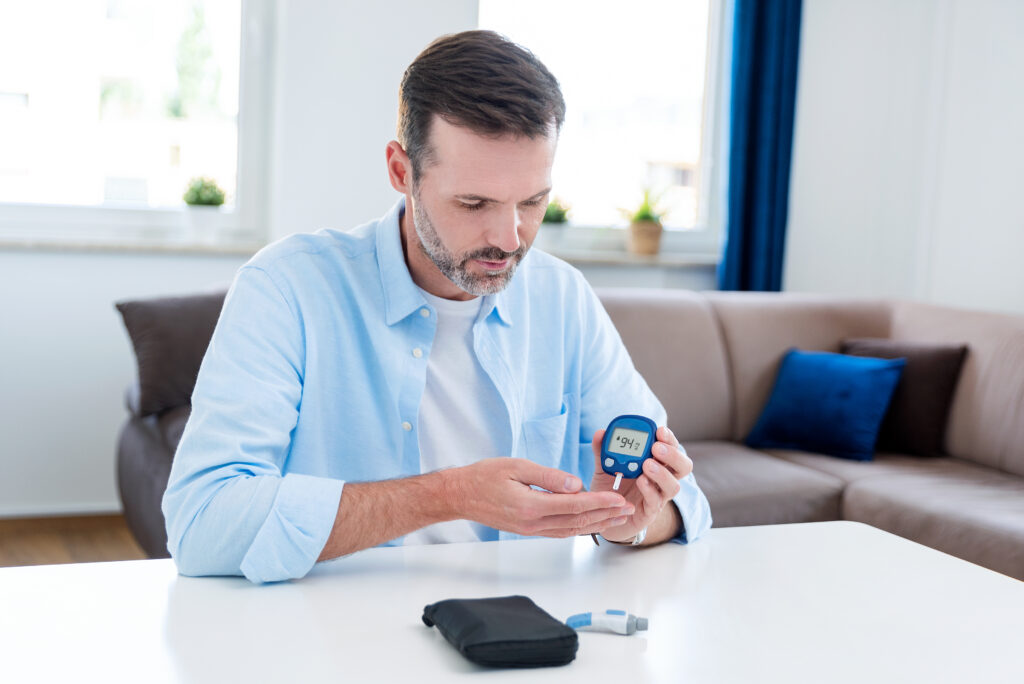
If you have health insurance, some of your costs of living with diabetes may be covered by Extras Cover, including the cost of getting a blood glucose monitor (depending on your level of cover). Other diabetes costs under Extras Cover include services provided by allied health professionals, including:
Exercise Physiology – according to Diabetes Australia, exercise plays an important role in managing the condition. You can claim back part of the costs of getting guidance on exercise from an accredited exercise physiologist. And if you exercise at a gym to help manage diabetes, you may be able to claim back the costs of your gym membership.
Dietary Advice – you can claim back the cost of working with an accredited practising dietician, who can develop a healthy eating plan to manage your diabetes.
Podiatry – diabetes is linked to nerve and circulation problems in the feet. A podiatrist can help assess your risk of foot issues and reduce complications, and this cost may be claimable under Extras Cover.
Psychology – if you’re feeling overwhelmed, anxious or stressed due to the emotional burden of living with diabetes, getting support from a psychologist could help. Depending on your level of cover, psychology sessions may be covered by Extras Cover.
Will health insurance cost more if I have diabetes?
Fortunately, if you have diabetes but don’t have health insurance, you can start cover now without being penalised. In Australia, health insurance is community rated not risk rated, which means insurers can’t refuse you cover, and they won’t charge you more for having a chronic illness. There will, however, be a waiting period of up to 12 months for pre-existing conditions like diabetes.
To find the policy that best meets your needs, try the healthslips.com.au Calculator. It’s the only comparison calculator available that shows you every policy from every insurer and you can use our calculator for free.
The advice in this article is general in nature and must not replace the advice given by a qualified healthcare professional. We recommend you talk to your healthcare professional before making any changes to your lifestyle or trying new treatments for diabetes.
Trudie McConnochie
Writer and Researcher
Knowledge is power – that’s the guiding principle behind everything Trudie writes, and it’s a philosophy she brings to her work at healthslips.com.au. By breaking down complex information into easy-to-understand blogs and stories, she aims to empower Australians to make the best choices and an informed decision around private health insurance.
Trudie understands firsthand some of the complexity of private health insurance having moved to Australia from New Zealand and having to navigate a vastly different public healthcare system and health insurance structure.
Trudie holds a Bachelor of Communication Studies (journalism major) from the Auckland University of Technology.